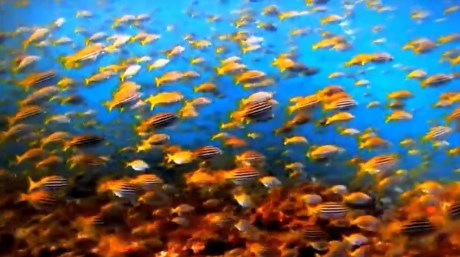
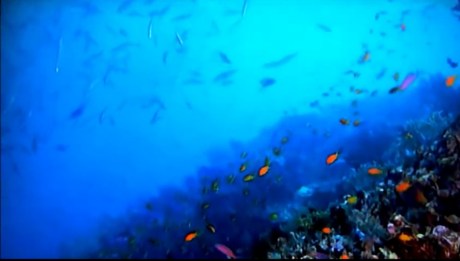
A film still found of striped fish was the inspiration to the following piece of art, dyed in complementary and analogous colors.
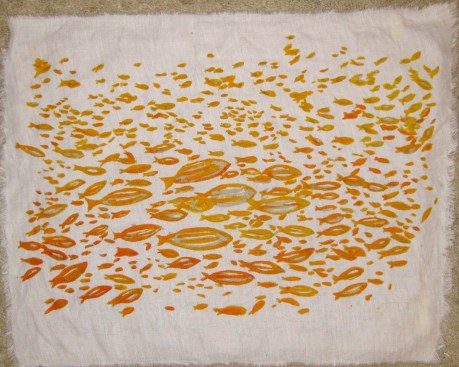
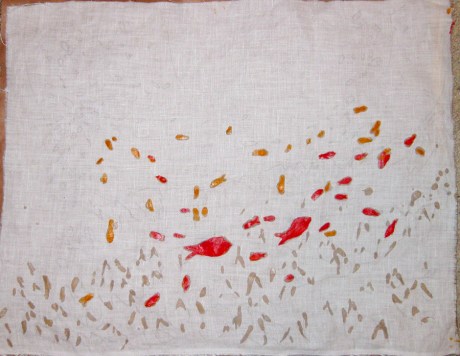
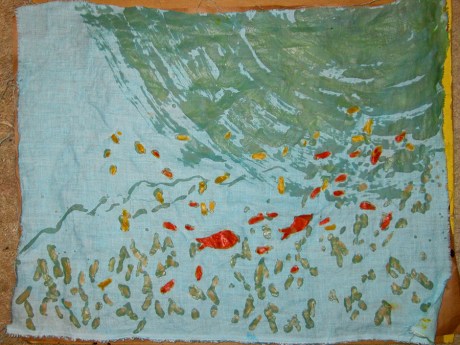
 I mixed yellow and red Jacquard’s paint dye and painted the fish onto a cotton, linen remnant.
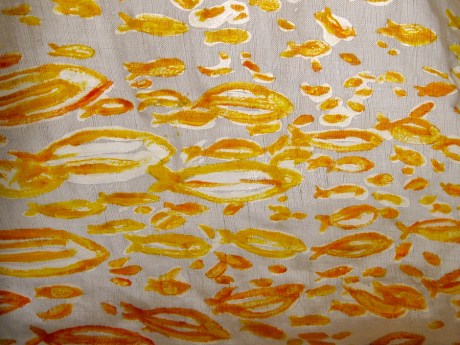
 I then painted over the fish with melted wax and where ever I wanted it left white.
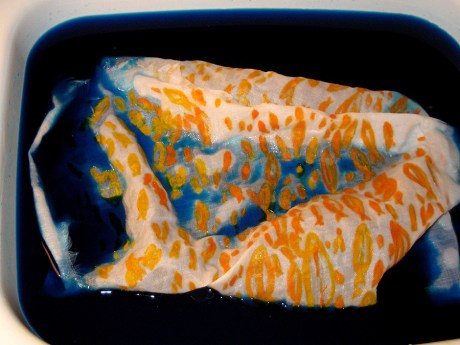
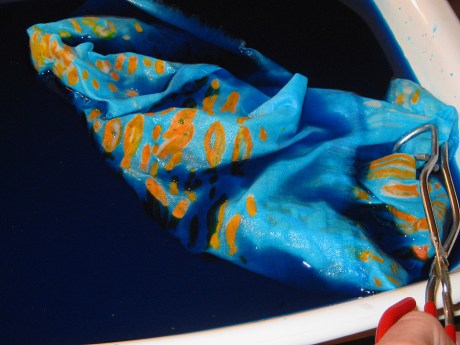
 The dye bath was a light mixture of Caribbean Blue.

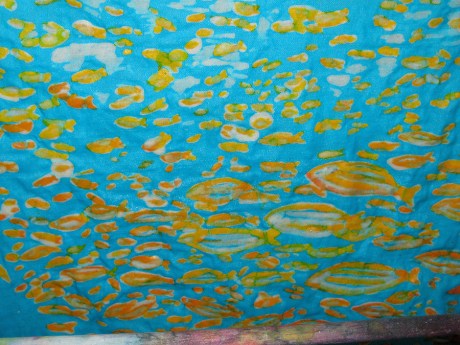
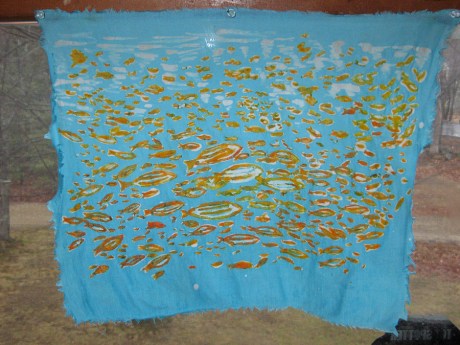 I let it dry and placed it in the window to see the image clearly.
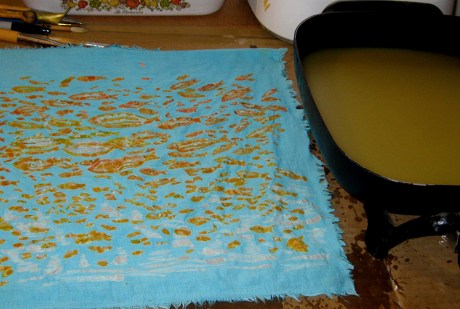
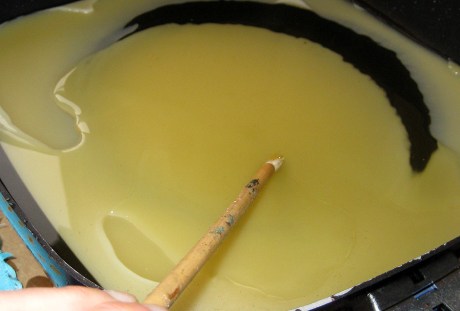
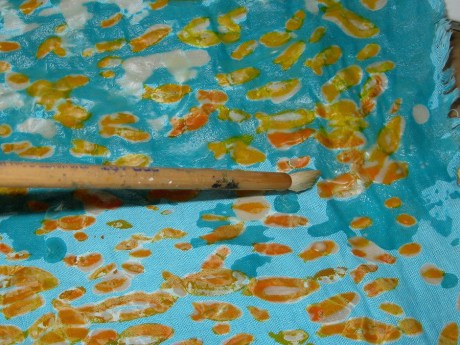 I brushed on the melted wax where I wanted the light blue to remain.
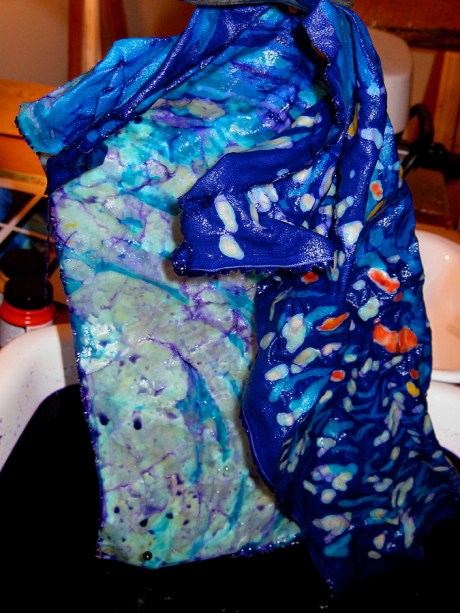
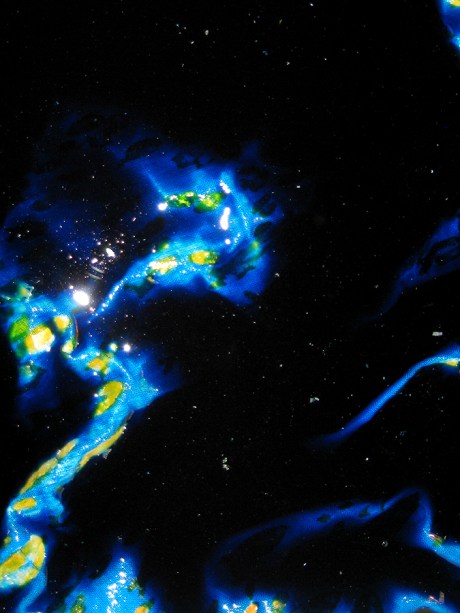 Then, dyed it in a darker shade of Caribbean Blue.
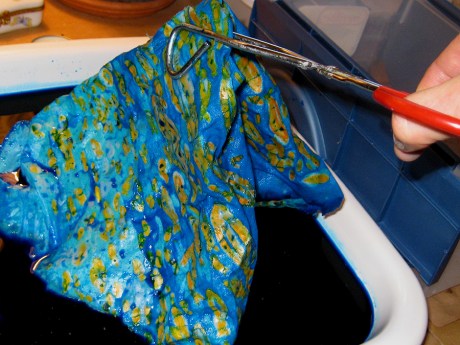
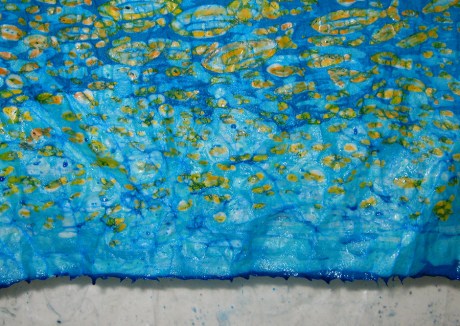
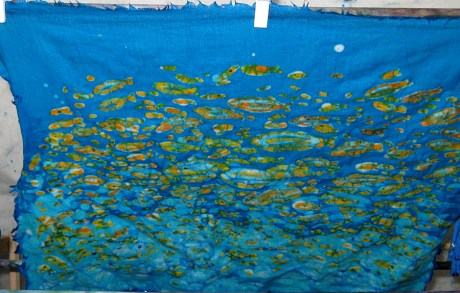 Hung it up to dry. Here the light and darker blue show well.
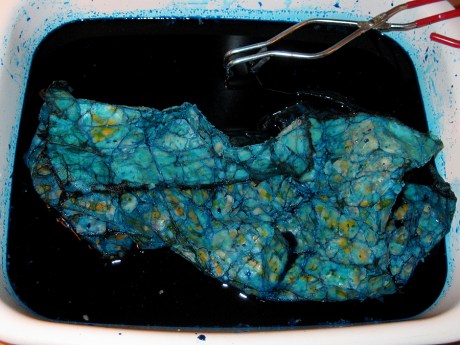 The next dye bath was an even deeper shade of blue.
 In the window all the colors can be seen.
The last dye bath was Black and Golden Yellow.
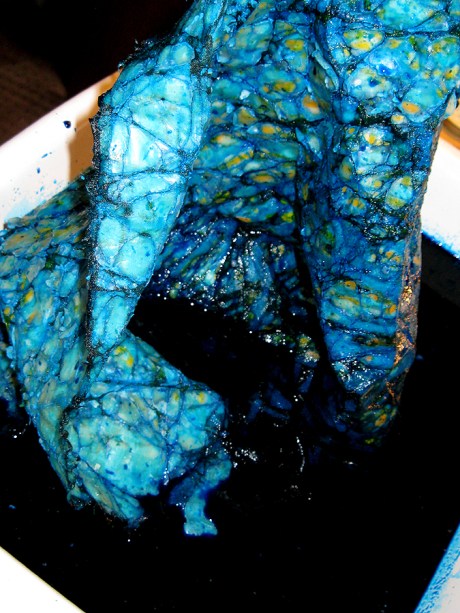
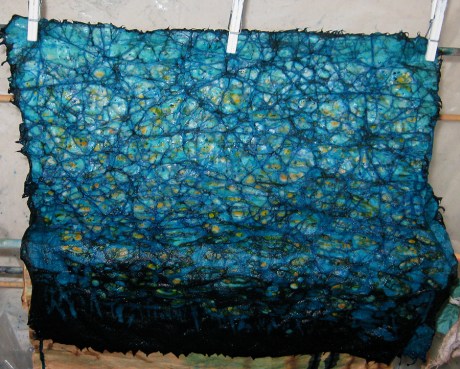 When dyed over the Caribbean Blues, it turned the cloth into a deep green hue.
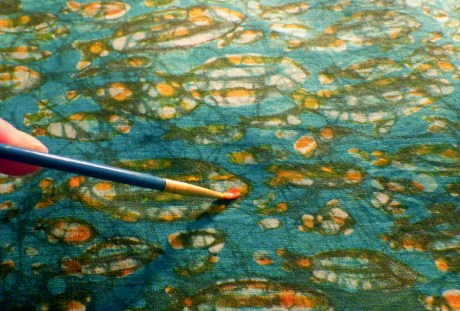
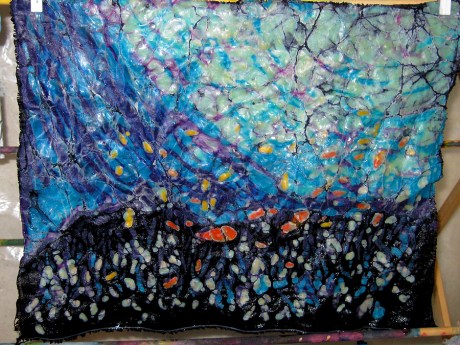
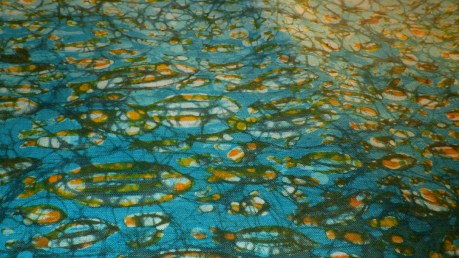 I painted over the fish with more orange dye after boiling out all the wax, to brighten it up a bit.
 Final piece back lit from afternoon light in window.
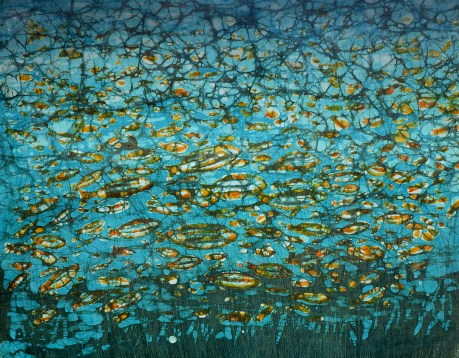 This was a challenging piece because of the amount of wax applied and with the final dye, I didn’t know what color would emerge. One can do test pieces, but I like the surprise. I did crumple up the piece before the final dye quite a bit which let in more darkness than wanted, so I ended up adding another layer of orange to the fish.
Here is a link to a more instructional way of doing batik. Fish in the big blue ocean, batik style
To see batik gallery visit this site Batik as Contemporary Art
 I drew out the design in pencil on a piece of linen and painted red and yellow fish with Jacquard’s painting dye. Let it dry to set. Then, melted wax to 350 degrees and brushed it over the fish so they would not be dyed in the subsequent dye bath, or, wherever I wanted to keep the image white. The wax acts as a resist to the dye.
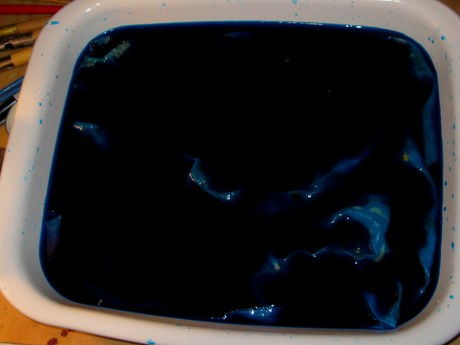
 I dyed it in a light Caribbean Blue for an hour, agitating it here and there.
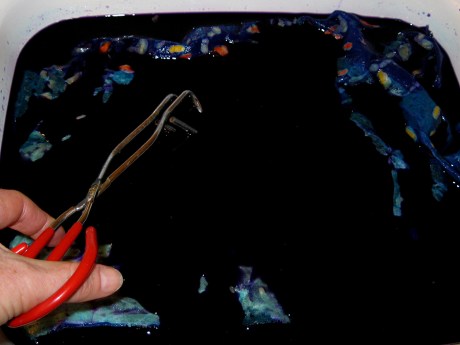 With each dye bath, first mix up the Procion MX dye in a container and add this concentrated dye to about 2 quarts of warm water, which is enough to cover about 14 inches of cloth. Add a little salt to the dye bath, then put the fabric in and let it sit for about 10 minutes. Take out the fabric and add about a teaspoon of Soda Ash to the salty dye and mix it up. Put the fabric back in the dye solution and agitate. Let it be in the dye for at least 30 minutes to an hour.
 Hang the fabric and let the dye adhere to the fabric, about 10 to 30 minutes or it can dry overnight.
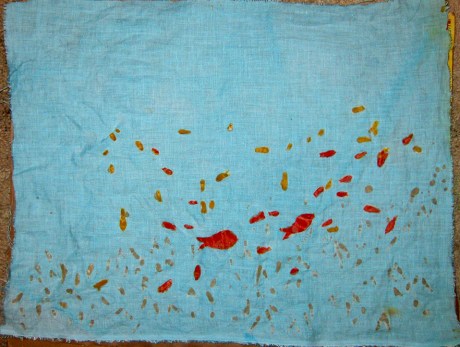 Wash the fabric with Synthrapol and let it dry.
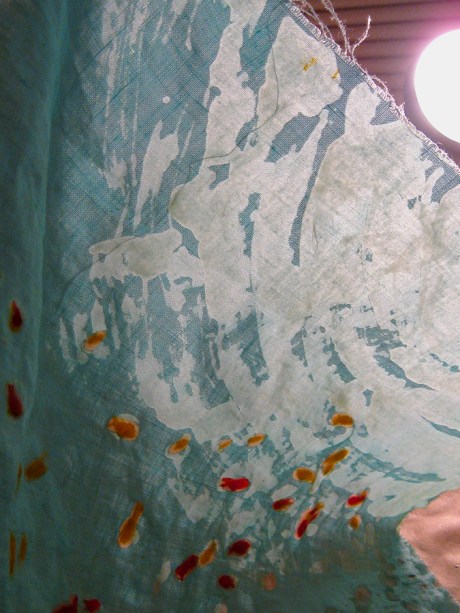 I made a darker shade of Caribbean Blue for the next dye bath.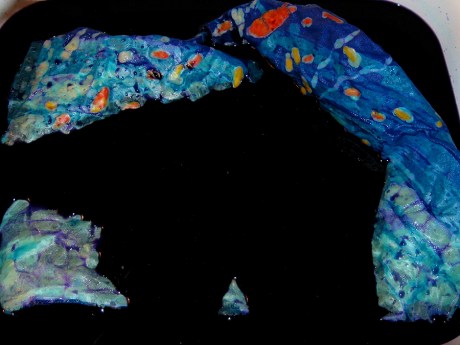
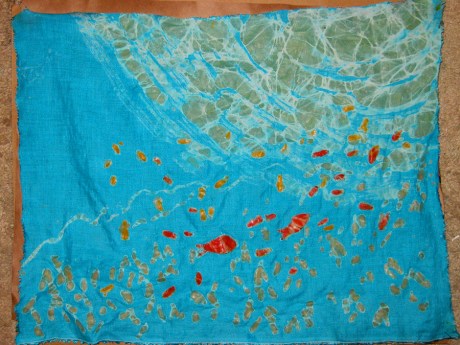 Hung fabric for a least 30 minutes to let the dye adhere to the fibers, washed it out to get rid of excess dye and let it dry. Then, I added more melted wax to the piece where I wanted it this shade of blue.
 After adding the wax I put it in a dye bath of Robin’s Egg Blue, Wisteria Blue and a little Scarlet Red. When dyed over the Caribbean Blue, it produced a purplish hue.
 Let the dye adhere to fabric. Wash it and hang it up to dry.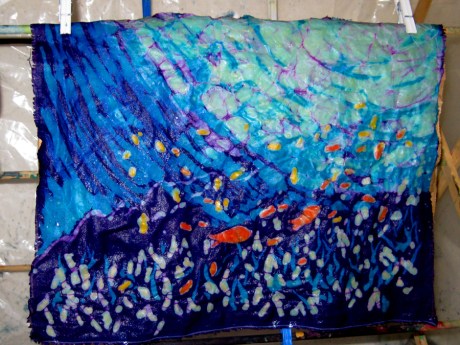
 I added more wax to keep the purple color and put it in a Black dye bath for at least an hour. The final dye is tricky because it’s your darkest shade that will make the other colors pop, but it’s also saturating fibers, that by now, are filled with a lot of dye particles, so you have to wash the fabric out thoroughly with a little extra Synthrapol, add more dye than usual and keep it in the bath longer.
 Boiling will get out most of the wax. If not, iron the piece between pieces of thick paper until all the wax is gone.
 Final piece in window.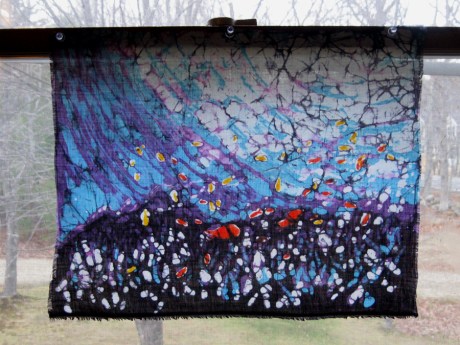
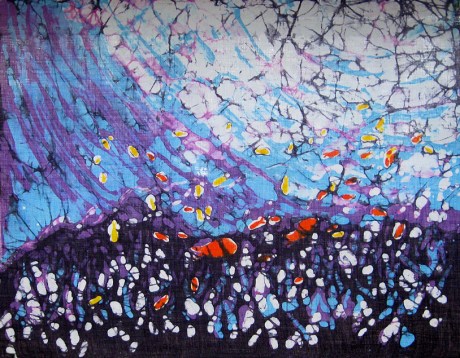 One piece of Batik can take a few days to finish, this one took me a couple of weeks. I’ll let the fabric dry overnight sometimes and just work on the piece whenever I can. The end result is always a surprise. It’s a little bit like developing film in a dark room.

 channeling the abstract